
Your Next Yearbook Timeline Starts Now: A Month-by-Month Planning Guide
Every great yearbook starts long before the first page is designed.
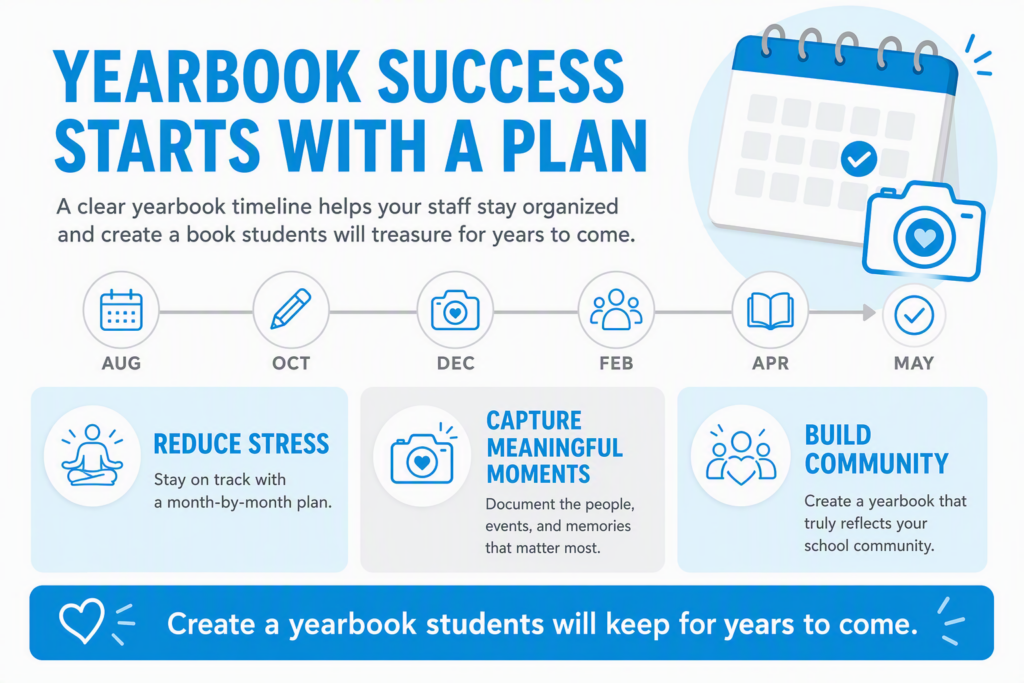
While every school’s process looks a little different, having a clear timeline helps you stay organized, reduce last-minute stress, and capture the moments that truly matter throughout the year.
The good news? You don’t have to figure it out from scratch.
Here’s a simple, month-by-month guide to help you plan, create, and deliver a yearbook your students will love.
Summer: Get Your Bearings
Before the school year begins, take advantage of the quieter summer months to get comfortable and prepared.
Focus on:
- Logging in and getting familiar with the yearbook website
- Signing up for webinars or reviewing the video library
- Turning on Planning Pages to start organizing your book
This is your time to build confidence and set a strong foundation.
August: Make Your Plan
As the school year kicks off, it’s time to get organized and aligned.
Focus on:
- Selecting your yearbook theme
- Evaluating book-building options
- Assembling your yearbook team or helpers
- Setting up Community Upload to gather photos
- Starting to collect candid photos early
- Launching an early bird sale
Starting strong here sets the tone for the entire project.
September: Design Time
Now that you have a plan, it’s time to start building.
Focus on:
- Creating your ladder diagram (your page-by-page plan)
- Selecting page layouts or building custom designs
This is where your yearbook begins to take shape visually.
October: Design Your Cover
Your cover is the first impression—make it count.
Focus on:
- Starting your cover design
- Managing unassigned or missing portraits
Getting ahead on portraits now avoids bigger headaches later.
November: Flow Portraits
This is a key production milestone.
Focus on:
- Finalizing portrait groups
- Flowing portraits onto pages
Staying organized here helps keep your book accurate and on track.
December: Sell, Sell, Sell!
Before the holiday break, shift your focus to awareness and sales.
Focus on:
- Opening your yearbook sale (if you haven’t already)
- Promoting yearbooks to families and students
- Taking advantage of a lighter schedule before the busy production season
This is a great time to build momentum before January deadlines begin.
January: Watch Those Deadlines
The production phase is in full swing.
Focus on:
- Submitting your cover
- Beginning to submit completed pages
Staying on top of deadlines now helps avoid last-minute rushes later.
February: Review. Refine. Ready.
Consistency is key during this stage.
Focus on:
- Downloading proofs and reviewing pages carefully
- Submitting completed pages by deadlines
Accuracy matters—take time to review names, captions, and layouts.
March: Final Sales Push
It’s your last opportunity to maximize participation.
Focus on:
- Reviewing online orders in Sales Tracker
- Adding cash/check orders to Sales Tracker
- Merging orders with student records
- Continuing to build and submit pages
A strong push here helps ensure more students don’t miss out.
April: Submit Your Order
You’re in the final stretch.
Focus on:
- Photographing spring events and adding final pages
- Finalizing all orders
- Ordering a supplement if needed
This is where everything comes together.
May: Celebrate Your Delivery
The most exciting part of the process.
Focus on:
- Planning a yearbook delivery day or celebration
- Selling any remaining books
- Reordering additional copies if needed
There’s nothing better than seeing students experience their yearbook for the first time.
June: Begin Again
Before you close the chapter, set yourself up for next year.
Focus on:
- Paying your invoice
- Starting early planning for the next yearbook
Because the best yearbooks are built with what you learned the year before.
A Yearbook Is Built All Year Long
With the right timeline, creating a yearbook becomes less overwhelming—and more rewarding.
By planning ahead and staying on track each month, you can:
- Reduce stress
- Capture more meaningful moments
- Create a book that truly reflects your school community
And ultimately, deliver something students will hold onto for years to come.